
Editor’s note: The following comprises the fourth chapter, second part (B4), of The Gospel of Luke: An Exposition, by Charles R. Erdman (published 1936). All spelling in the original.
4. The Call of Levi (5:27-32)
___________________________________________________
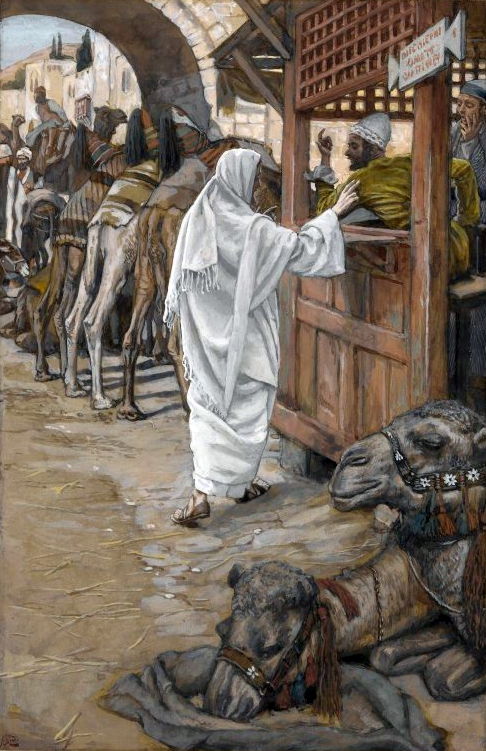
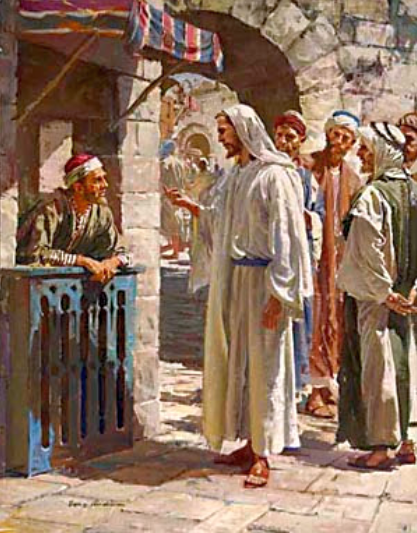
27 And after these things he went forth, and beheld a publican, named Levi, sitting at the place of toll, and said unto him, Follow me. 28 And he forsook all, and rose up and followed him.
29 And Levi made him a great feast in his house: and there was a great multitude of publicans and of others that were sitting at meat with them. 30 And the Pharisees and their scribes murmured against his disciples, saying, Why do ye eat and drink with the publicans and sinners? 31 And Jesus answering said unto them, They that are in health have no need of a physician; but they that are sick. 32 I am not come to call the righteous but sinners to repentance.
___________________________________________________
Nothing could further emphasize the sympathy of Jesus than his calling a publican to be his close companion and friend. These taxgatherers were everywhere despised for their dishonesty, extortion, and greed; but Jesus chose one of them named Levi, or Matthew, and transformed him into an apostle, an evangelist, and a saint.
There must have been something admirable in the character of the man; at least there was something inspiring in his example, for as soon as he heard the clear call of the Master, “He forsook all, and rose up and followed him.”
Probably he had more to leave than any of the twelve men who became apostles of Christ. He must have been possessed of wealth. At least, as soon as he was converted, he made “a great feast in his house” and invited “a great multitude of publicans and of others” to be his guests. He had the courage of his convictions; he was not ashamed of his new Master. He was eager to have his old friends introduced to Christ.
It was on the occasion of this feast that Jesus was criticized by the Pharisees for eating and drinking with publicans and sinners. He made this most significant reply: “They that are in health have no need of a physician; but they that are sick. I am not come to call the righteous but sinners to repentance.” By this statement Jesus emphasized and vindicated his conduct and defined his mission. A physician enters a sick room, not because he delights in disease or rejoices in suffering, but because he desires to cure and to relieve; so Jesus companied with sinners not because he countenanced sin or enjoyed the society of the depraved, but because, as a healer of souls, he was willing to go where he was most needed and to work where the ravages of sin were most severe. He came into the world to save sinners. Their conduct distressed him, their sins pained him; but to accomplish his task he sought them out and showed his sympathy by his presence and by his healing power.
Are there any who do not need the spiritual cure he can effect? Are any “sound;” are some not “sinners”? These questions each must answer for himself. Probably those who like the Pharisees are least conscious of their sickness are in most desperate danger. Then again, are those who know his power willing like the Master to go with his gospel to the places of greatest need?
(Go back to previous chapter)
(Continue to next chapter)
The Gospel of Luke: An Exposition (Luke 5:27-32)

1 Comment Leave a Reply
Leave a Reply to Tim from Nashua Cancel reply
Support Men Of The West


Latest from Religion

Godfrey de Bouillon: The First Crusade
The Asiatic tribes which embraced the religion of Mohammed, though presenting many diversities of character, were, during the middle ages, generally confounded under the name of Saracens, the original title of an

How We Got Here
Charlie Kirk was martyred, for speaking the truth and spreading the Gospel. One wonders how someone who adamantly preached nonviolence was violently murdered. Turns out that’s not unusual, but it is cause

On the Assassination of Charlie Kirk
It’s been a while since I’ve written anything. And I don’t feel like I have a lot to add to this conversation that others more eloquent than me have already said. After

Nice, But We’re Not Supposed To Be
Imprecatory Psalms. You'll never hear them preached on Sunday mornings. It's dangerous. The sentiments sound selfish and vindictive to our Enlightened ears. Bring up this verse and this Psalm to any number

…and Before Honor, is Humility
The fear of the Lord is the instruction of wisdom,And before honor is humility.– Proverbs 15:33 Let us praise famous men, and our fathers that begat us. All these men were honoured in their generations, and were a
I compare Matthew’s response to the call of the Master, to that of the rich young ruler. Unlike Matthew, the man stated that he kept all the commandments since his youth. Still, he asked what he lacked to attain eternal life. When told to sell all his things and FOLLOW ME, he went away sad because he had many possessions. Matthew knew what the religious folk thought of him, and jumped at the chance to follow Jesus. The rich young ruler considered the cost to be too high. He couldn’t recognize the Pearl of Great Price, nor did he discern the Treasure in the field. Matthew was ready to take that chance, plus he introduced his ‘less than reputable friends’ to meet Jesus, perhaps saving their souls as well, whereas the rich young ruler affected no one except perhaps those that read of this account in the Gospels, and heard the “Come follow Me” more than the “Sell all you have.”