Editor’s note: The following is excerpted from The Scope of Music, by Percy C. Buck (published 1927).
The title of this lecture will, to a great majority of people, seem so forbidding that I feel it needs a justification, if not an apology. Art aims at creating the impression of beauty, as every one admits when, by calling things ugly, they deny them artistic excellence. Yet as soon as you put to any one the question ‘What is beauty?’ you will find that, almost invariably, the question is considered a foolish one, since everybody uses the word and everybody knows what it means. It is, nevertheless, a question which the deepest thinkers have been puzzling over from time immemorial, and though, no doubt, some of them have thought that they had caught the will-o’-the-wisp, they have been, one and all, singularly unable to prove their success in intelligible language.
All discovery is founded on curiosity. Even accidental discoveries would pass unheeded if somebody did not (like Newton with the apple) ‘wonder why’. And the first invariable custom of primitive man is, when seeking the cause of anything, to take refuge in personification. He feels a certain emotion and invents some one as the cause of it—in technical language he is said to ‘reïfy’ it. The woods at night frighten him, so he creates a spirit of the woods; insanity passes his understanding, so he says the insane are possessed by devils; until he has at last provided himself with a hierarchy of quasi-deities and lulled himself into the habit of attributing all things to causes outside himself and outside his control.
Consequently it seemed obvious, and would seem obvious to you and me if we were a little more primitive than we are, that beauty was entirely a property of the thing we called beautiful. It was beautiful because it possessed beauty; and if it was not beautiful you might make it so by adding beauty to it just as you mix sugar with pudding to make it sweet.
I should be the last person to say anything disrespectful, especially in Scotland, about metaphysics, since I firmly believe that a knowledge of metaphysics, even if it is as small as my own, is the greatest incentive to clear thinking. But in this matter of beauty I think no one can say that the metaphysicians have helped us much. And though it may be rash for a non-philosopher to say so, I venture to think the reason of their failure lies in the fact that they have never got away from the attitude of primitive man. To them beauty is always a property of the object and nothing else, and their quest of it through innumerable centuries has been so unsuccessful that even now none of them have coaxed it from its hiding-place.
If, however, you have followed, however distantly, the course of thought through the last few decades, you will know that its whole procedure, both in aim and methods, has been changed by the rise of modern psychology. To the psychologist this tendency to reïfy is the stumbling-block to all knowledge. To him the central fact is human reaction. An object, present or remote (which means outside the range of actual contact with the senses), is perceived by a subject, and in the reaction of the subject lies the field of attainable knowledge. Thus to the psychologist ‘beauty’, as an entity, has no existence per se. But when a certain thing is the cause of a certain effect in us we say we have an impression of sweetness or softness or beauty; and that since these effects, previous to our reaction, had no more existence than a sound has previous to the effect of vibrations on a brain, it is manifestly absurd to reïfy the effect and call it a cause.
If the above is a fair description of the quarrel between metaphysician and psychologist—and I think it is we may say, without arrogating to ourselves the function of arbiter between them, that the examination of our own reactions does seem, to musicians at all events, to present some possibilities of getting a little insight into the problems of the beautiful. If Cambridge wins the boat-race the Oxford man feels sad, and may well wish, if he is of a speculative turn of mind, to find out what type of cause produces the effect of sadness in him. But to look for the sadness in the boat-race, or to say it resides in the result, seems to the plain man to be deliberately placing the specimen where the microscope cannot reach it. We know that we feel, we know that art works on our power of feeling, and we know that when we feel in a certain way we say, proleptically, that the cause of the feeling is beautiful; and there should be a reasonable chance of arriving at some consensus of opinion as to what qualities are essential in an object if this particular reaction is to follow in us.
First of all, let us be clear as to the meaning we attach to the words ‘feeling’ and ’emotion’. We are all apt, and even accredited psychologists are sometimes little better, to use the words in a loose overlapping way. Emotions are the definite qualities coupled with the instincts. Fear, for example, is the emotion accompanying the instinct of self-preservation, anger that accompanying the instinct of pugnacity, amusement that accompanying the instinct of laughter. ‘Feeling’ is something quite different. It has only two qualities, pleasure and pain; that is to say, we know whether we wish to increase or diminish the intensity of our feeling, since it is nearly always on either the pleasant or unpleasant side. Both qualities can be present together, as when we deliberately press on an aching tooth, or suck a lemon, in which cases we know that the pleasure comes from the pain, and judge that the agreeable outweighs the disagreeable; when the balance turns the activity ceases. Every emotion has a feeling-tone, as it is called: amusement is pleasurable, anger painful; but the feeling is not the emotion, nor the emotion the feeling, though in conversation we confuse the two and call a person emotional if his feelings are easily affected.
Now if I wish to communicate with you, I can only approach you through your senses; if these are shut off from me I can no more get into contact with you than a lemon can get into contact with a logarithm. But if I am able to appeal to you through your senses, then my appeal must be either to your understanding or to your feelings. I may say ‘It’s ten o’clock’, or I may utter a cry of distress that will affect your feelings even before you realize what it signifies. Innumerable sciences (such as grammar, logic, and the rest) have grown up which are concerned with the appeal to the understanding. But though the appeal direct to the feelings is rare, they can, nevertheless, be reached without the intervention of the understanding; as when a sudden clap of thunder, rousing our instinct of self-preservation, causes the painful feeling, however much under control, of fear, or when a beautiful sunset, rousing the instinct of self-abasement, causes the pleasurable feeling of humility.
Art, you will agree, must in the end reach our feelings, since a work of art which leaves us completely unmoved is, for us, no work of art at all. We may apply to it some preconceived critical apparatus and discourse learnedly on its excellences or shortcomings, but if we are entirely unaffected by it—if we find we have to say ‘it leaves me cold’—then the contact between its creator and us has not been made, and if you will pardon an expressive colloquialism, the whole proceeding is a ‘wash out’—only, remember, so far as you are concerned, since your neighbour may be intensely moved. Our inquiry then becomes an attempt to answer the question, ‘How does art reach our feelings?’ Does it, like the thunder, awaken a primitive instinct with its concomitant emotion, or does it find some other path to them? The answer is that art reaches our feelings always through the understanding. It is not, like logic and grammar, an appeal to the understanding, but aims at a goal whose only approach is through the understanding. And since this conception of art seems to me to be fundamental, I will try to show you the grounds on which it rests.
Imagine some particular thing that gives you pleasure: let us say a note on the clarinet, or a line of poetry such as ‘Home they brought her warrior dead’. You admit that either of these instantaneously changes, however slightly, the ‘quality’ of your feeling, and you find, if you try to give a reason, that you have embarked on a long and vague explanation which, in the end, does not satisfy even yourself. Suppose, however, that you make an experiment, and change the relationship of the constituents in each case. Alter the arrangement of partial-tones that gave the clarinet-quality to the sound; imagine the line of poetry to be ‘They brought her warrior home dead’. The state of your feelings will also change in the direction of greater or less pleasure. And it is this fact that is implied in the definition, so cryptic to the uninitiated, that ‘all beauty is relative’. It comes like a cold douche to the enraptured beauty-seeker to be told that the effect of things on him is due to the ‘relationship of the constituents’, and he suspects that you, deserted by the gods and deprived of the power of feeling that thrill which beauty brings to him, are trying to entangle him in the morass of mathematical formulae. Yet the statement, in all its cold-bloodedness, is true. By tampering with the partial tones of the clarinet it would be quite easy to make you call the sound ugly; and if the clarinet played a tune, and you called the melody, as distinct from the tone, a beautiful one, any alteration in the relative position of the notes will modify your verdict.
Consider a simpler case. You enter an empty apartment and exclaim ‘What a beautiful room!’ The room next door, if an exact reproduction, produces an effect only lessened because the element of surprise is absent. If you then enter a third empty room and exclaim ‘Not nearly so beautiful’, is there anything to account for your change of feeling except a difference in its proportions—i.e. in the relationship of its parts? Similarly with such things as tables, chairs, and carpets, with which a room is furnished, the beauty of each depends on relations within itself. And the effect of a room where every piece of furniture is in itself beautiful may be (and often is) ugly, while the effect of another where all the furniture is ugly (so long as it is not ugly enough to distract your attention from the room as a whole) may be beautiful. And this is the meaning of the rather hard saying that ‘beauty is relative’.
If you grant the truth of this conception of beauty you will find little difficulty in accepting my premise that art appeals to the feelings through the understanding, since relationships between any things whatever are apprehended by the understanding and not by the feelings. Certain relationships produce a state of feeling in you which is modified by a change in the relationships; which means that ‘you’ have discriminated between the two things presented to you. But it is only your understanding which can discriminate, and your change of feeling is the result of the discrimination.
There remains the question of the intensity with which we react, and I think we shall all agree that our experiences are identical in process, although we do not react with the same intensity to the same stimuli. If I hear a series of melodies I may say that I rather like the first, the second better, the third a good deal, and so on. My pleasure in them increases steadily, if they happen to be placed in the right order. At last there comes a melody which gives me so intense a pleasure that I am taken out of myself’, as we say, and am so deeply moved that I almost feel I have handed over my self-control to, and am dominated by, some outside influence. I suppose all of you will admit that art has at some time had this intense effect on you. The Greeks called this transcendent moment catharsis, for we feel we are undergoing a kind of purification. The earlier melodies gave me pleasure, each seeming ‘more’ beautiful than the last, but the final experience seems to bring me into the presence of perfect beauty. I can safely use the word in this sense now, for you know that I am reïfying in order to be intelligible, and that all the time I am aware that the process under examination has taken place in me. It was I who had the feeling of pleasure, it was my feeling that grew more and more intense until the moment when I can only express it by saying that any feeling of pleasure has been transmuted into a feeling of beauty.
I used, just now, the phrase ‘more beautiful’, and there is a difficulty in connexion with it which brings a fog into many minds. People are always to be found disputing whether one thing is more beautiful than another, and the argument generally ends with a shrug of the shoulders and a quotation of the old tag, ‘De gustibus non est disputandum’.[1]
There can be, of course, no certainty that what appeals to your taste appeals to mine; but I should like you to see that the discussion of matters of taste can nevertheless be profitable if we once recognize the limitation which this truism involves. If you love oranges and hate lemons, and I like lemons and detest oranges, any discussion between us as to which is the ‘nicer’ is ruled out by the facts of the case. It is a question which is never going to be settled in this world or any other, and no one could be in the least happier if an irrevocable decision were given. But there is a point we might discuss (but probably would be too acrimonious to think of) which has a really practical importance, and is the only consideration that matters to anybody: what constitutes the difference between a good and bad orange, or a good and bad lemon? You may think a discussion on these lines, leaving less room for personal dogmatism, might prove rather a tame combat, but, if you think how a Chinaman is said to prefer his eggs, you will see there are still a good many first principles to be agreed upon; and you will have the satisfaction of knowing that on no other lines can the argument clear the air at all.
Yet every musician must have listened time and again to disputes—it would be too complimentary to call them arguments—whether symphonies are nobler things than symphonic poems, or whether the fugue is a higher form of composition than a nocturne. A beautiful symphony is better than a dull symphonic poem, and vice versa, because the one brings the listener nearer to his catharsis than the other. A fugue and a nocturne both appeal to the listener’s feelings through his understanding. The fugue may become so entangled in the understanding that it gets no further, just as the nocturne may be so sentimental that the understanding can find nothing in it to grip, and then the problem for discussion is whether we can postulate any ratio between the two appeals, or fix any limits to the importance either must assume. There are more or less beautiful symphonies and fugues and nocturnes, and opinion, experienced and educated, does ‘tend to a common focus’ in judging specimens of each class of composition. But in trying to compare one class with another we enter an arena where the dogmatic assertion of personal preference is the only weapon with which either side can fight.
I will now try to sum up briefly the position that I have tried to reach, and from which I mean to argue in the remaining lectures, by giving what seem to me the answers to the three questions we ask about art as about everything else: What, How, and Why.
What is art?
To the artist it is a presentation in form of feeling which he has experienced. In its highest aspect it is a presentation of his own catharsis, though a great deal that we would not willingly lose has its origin in feeling on a lower plane. But it must originate in some feeling, or it is manufacture from the artist’s point of view, even if it deceives the whole world. ‘Presentation in form’ means that the artist, having felt, can express that feeling in words, colour, or sound, and his deftness in doing so is called ‘technique’. Many human beings can express their feeling in some medium so that it can subsequently remind them successfully of the feeling that created it; some can express it so that you and I can understand what the artist felt; but only the great artist can succeed in making you and me experience the feeling that, in him, created the work of art. The object of the work of art—though the artist himself may have had no object but the satisfaction of his own impulse to create—is to communicate to us this reflection of the artist’s feeling, a reflection which is often called, somewhat loosely, ‘substituted emotion’.
How does art make this contact between two minds?
Our reaction to certain sensations is accompanied by a feeling of pleasure. The artist works on the discovery that the sensations of sound and colour can be so arranged that the understanding can grasp the arrangement, and that then the feeling of pleasure can be indefinitely intensified. We know that the part you understand is not art: that if we feel pleasure when he says, ‘fast falls the eventide’, the pleasure is in no way due to the fact that it is getting dark; but we know also that if we did not understand the meaning of what he says the pleasure would not arise, because the road through the understanding would be blocked. Were we to say, like children, that we enjoyed the sound of the sentence even though it meant nothing to us, then we are abandoning our claim to enjoy it as poetry, and our pleasure is in a rhythmical arrangement of sound, which is music. The part played by the understanding in enjoying music will be dealt with in later lectures, when I shall recur to the indispensable necessity of structure. But if you grant the fact that the understanding is an essential channel to be passed through, on its way to your feelings, by every artistic appeal, you will confirm my original contention that the more you understand about art the greater will be your enjoyment of it.
What is the final end of art?
Man has, as the philosophers tell us, a fourfold nature. He has a physical, a moral, an intellectual, and an emotional side. And, as regards the first three of these sides, it is universally recognized as unwise for a man to develop any one to the neglect of the other two. We all lament the earnest and round-shouldered student who dislikes and avoids physical exercise, the keen sportsman who leaves religion to his female relations, the burning moralist who has lost all touch and most sympathy with average humanity. But there seems to be complete indifference, at all events in England, as much amongst professed ‘educationists’ as amongst the general public, whether the emotional side of a man is developed in any way at all. The one and only conviction an Englishman has about emotion is that you should learn, as early as possible, to suppress it entirely.
Yet this side of man is in reality, as any psychologist will tell you, the most important of the four, since the other three are all, as mathematicians would say, ‘functions’ of it. To suppress it is impossible, and repression—the only substitute for suppression—is doubly dangerous, for it means that no attempt is made at guiding emotion into the right channels, and also that, although we think we have our heel on it, it is insidiously working its will within us and controlling our every action, and instead of being our most valuable servant, it becomes an invisible tyrant. What exercise should be to the physical side of our lives, religion to our moral, and learning to our intellectual side, this can art be, and nothing else but art, to our emotional side. A man may be physically perfect, stainlessly upright, and intellectually the envy of his friends, but if his emotional nature is closed to the refreshment, the strengthening, and the stimulation of art, he will come to the grave with no inkling of what life can mean when tasted to the full.
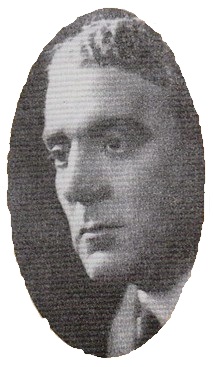
1871-1947
_______________________
[1] In matters of taste, there can be no disputes. (ed.)