
Editor’s note: The following comprises the fourth chapter, third part (C4), of The Gospel of Luke: An Exposition, by Charles R. Erdman (published 1936). All spelling in the original.
4. Jesus Raising the Widow’s Son (7:11-17)
___________________________________________________
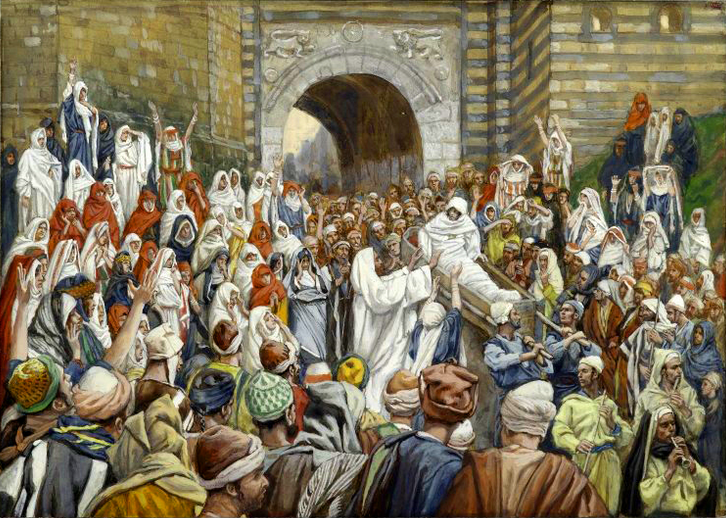
11 And it came to pass soon afterwards, that he went to a city called Nain; and his disciples went with him, and a great multitude. 12 Now when he drew near to the gate of the city, behold, there was carried out one that was dead, the only son of his mother, and she was a widow: and much people of the city were with her. 13 And when the Lord saw her, he had compassion on her, and said unto her, Weep not. 14 And he came nigh and touched the bier: and the bearers stood still. And he said, Young man, I say unto thee, Arise. 15 And he that was dead sat up, and began to speak. And he gave him to his mother. 16 And fear took hold on all: and they glorified God, saying, A great prophet is arisen among us: and, God hath visited his people. 17 And this report went forth concerning him in the whole of Judæa, and all the region round about.
___________________________________________________
If it was the purpose of Luke to impress upon his readers the sympathy and tenderness of the Man Christ Jesus, it is easy to understand why he alone of all the evangelists records this touching story of the raising from the dead of the son of the widow of Nain. No picture could be more full of pity and compassion. Jesus had not been asked to perform the miracle; he was moved wholly by the mute appeal of human sorrow and distress. As he drew near to the gate of the little city, he met the sad procession wending its way out to the place of burial. He was touched by the tears of the lonely mother who had lost her only son; moved with deep compassion he spoke to her the word of hope, “Weep not.” Then he came near and touched the bier on which the lifeless body was being borne. It was a sign more eloquent than a spoken word. Then came the command: “Young man, I say unto thee, Arise. And he that was dead sat up, and began to speak. And he gave him to his mother.” In view of such miracles, possibly we dwell too exclusively upon their purpose as authenticating the mission of Jesus, or as demonstrating his divine message. These purposes are real, but we must never forget that such works were also manifestations of the nature of the ministry of Jesus and revelations of the very heart of God. Such recitals dry the tears of mourners and bind up broken hearts and inspire the despondent with eternal hope. Surely Jesus is the Lord of life and he will yet wipe away all tears from the eyes of those that trust him.
(Go back to previous chapter)
(Continue to next chapter)

The Gospel of Luke: An Exposition (Luke 7:11-17)

Support Men Of The West



Latest from Religion

Godfrey de Bouillon: The First Crusade
The Asiatic tribes which embraced the religion of Mohammed, though presenting many diversities of character, were, during the middle ages, generally confounded under the name of Saracens, the original title of an

How We Got Here
Charlie Kirk was martyred, for speaking the truth and spreading the Gospel. One wonders how someone who adamantly preached nonviolence was violently murdered. Turns out that’s not unusual, but it is cause

On the Assassination of Charlie Kirk
It’s been a while since I’ve written anything. And I don’t feel like I have a lot to add to this conversation that others more eloquent than me have already said. After

Nice, But We’re Not Supposed To Be
Imprecatory Psalms. You'll never hear them preached on Sunday mornings. It's dangerous. The sentiments sound selfish and vindictive to our Enlightened ears. Bring up this verse and this Psalm to any number

…and Before Honor, is Humility
The fear of the Lord is the instruction of wisdom,And before honor is humility.– Proverbs 15:33 Let us praise famous men, and our fathers that begat us. All these men were honoured in their generations, and were a